Best GLP-1 Drugs for Weight Loss (2026 Comparison Guide)
If you’ve been researching best GLP-1 drugs for weight loss, you’ve probably noticed something: there are more options than ever — and it’s confusing.
The landscape of obesity pharmacotherapy has shifted dramatically in 2026. What was once a niche market for diabetes management has exploded into a global revolution in metabolic health. With the recent entry of triple agonists and refined oral delivery systems, patients and providers now face a “paradox of choice.” While having more options is beneficial, selecting the right medication requires a deep dive into clinical efficacy, side effect profiles, and long-term sustainability.
This guide provides an evidence-based comparison of the leading GLP-1 medications, utilizing the latest 2025 and 2026 clinical trial data to help you determine which therapy aligns with your metabolic goals.
For a foundational understanding of these hormones, visit our Complete Guide to GLP-1 for Weight Loss
What Are GLP-1 Drugs for Weight Loss?
GLP-1 (Glucagon-like peptide-1) drugs belong to a class of medications called incretin mimetics. They are designed to replicate the action of natural hormones produced in the gut that signal the brain and body to manage energy and hunger.
How GLP-1 Medications Work
Unlike traditional stimulants, GLP-1 agonists work through a multi-pathway approach:
Appetite Suppression: They target the “hunger center” in the brain (hypothalamus) to dampen cravings and “food noise.”
Slowed Gastric Emptying: By slowing the rate at which food leaves the stomach, these drugs prolong the physical sensation of fullness.
Insulin Sensitivity: They optimize how your body processes glucose, making them highly effective for those with insulin resistance or pre-diabetes.
GLP-1 vs. GLP-1/GIP Dual Agonists
In 2026, we categorize these drugs into two main buckets: Single Agonists (targeting only the GLP-1 receptor) and Dual Agonists (targeting GLP-1 and GIP). Adding GIP (Glucose-dependent Insulinotropic Polypeptide) appears to enhance fat metabolism and reduce the nausea often associated with pure GLP-1 therapy.
🔗 Learn more about the science: GLP-1 vs. GIP for Weight Loss
Most Effective GLP-1 Drugs (Ranked by Average Weight Loss)
The following rankings are based on 1-year (52-week to 72-week) clinical trial results and real-world 2026 data.
| Medication | Mechanism | Frequency | Avg. 1-Year Loss | Est. Monthly Cost |
|---|---|---|---|---|
| Retatrutide | GLP-1 / GIP / Glucagon | Weekly | 24–30% | TBD (High) |
| Tirzepatide | GLP-1 / GIP | Weekly | 21–22.5% | $550 - $1,060 |
| Semaglutide | GLP-1 Only | Weekly | 15–17% | $499 - $1,300 |
| Liraglutide | GLP-1 Only | Daily | 8–10% | $700 - $1,100 |
🥇 Tirzepatide (Brand: Zepbound)
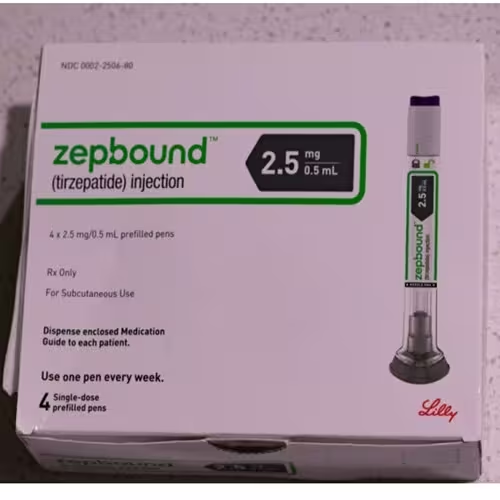
As of early 2026, Tirzepatide remains the gold standard for available weight loss efficacy. By acting as a dual agonist (GLP-1 and GIP), it mimics two “satiety” hormones rather than one.
Average Weight Loss: 21–22.5% 1.
Best For: Individuals with severe obesity or those who have plateaued on Semaglutide.
Pros: Highest approved efficacy; improved fat-burning profile.
Cons: Higher risk of diarrhea compared to nausea; can be difficult to find in stock.
Cost Estimate: Generally $1,060 list price, though manufacturer coupons in 2026 often bring this to $550 for commercial insurance.
🔗 Resources: Zepbound Results | Zepbound Cost | Dosage Guide
🥈 Semaglutide (Brand: Wegovy)
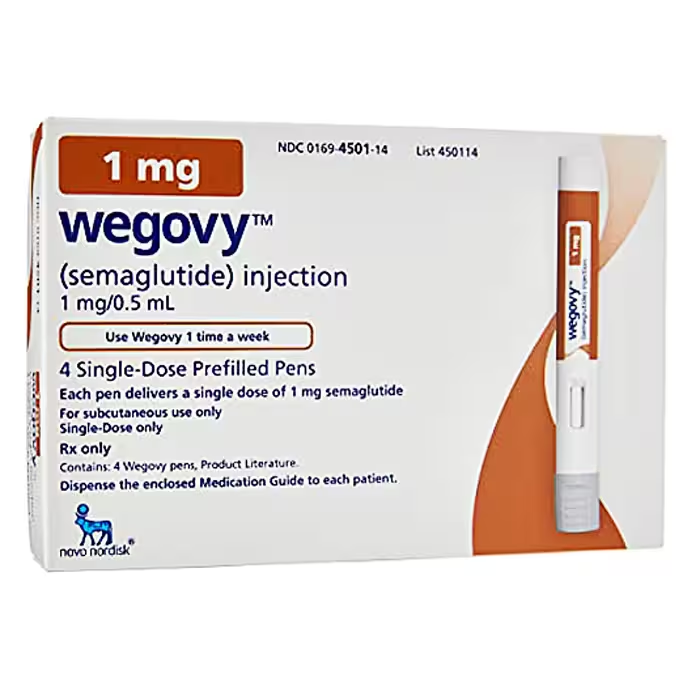
The drug that started the craze. Semaglutide is the most prescribed GLP-1 in the world. In mid-2025, Novo Nordisk slashed prices for cash-pay patients to remain competitive with Eli Lilly.
Average Weight Loss: 15–17% 3.
Pros: Extensive long-term safety data; proven cardiovascular benefits.
Cons: Higher reports of “nausea” during the titration phase.
Insurance: Most widely covered by insurance formularies in 2026.
🔗 Resources: Wegovy Dosage | Real-World Results
🥉 Liraglutide (Brand: Saxenda)
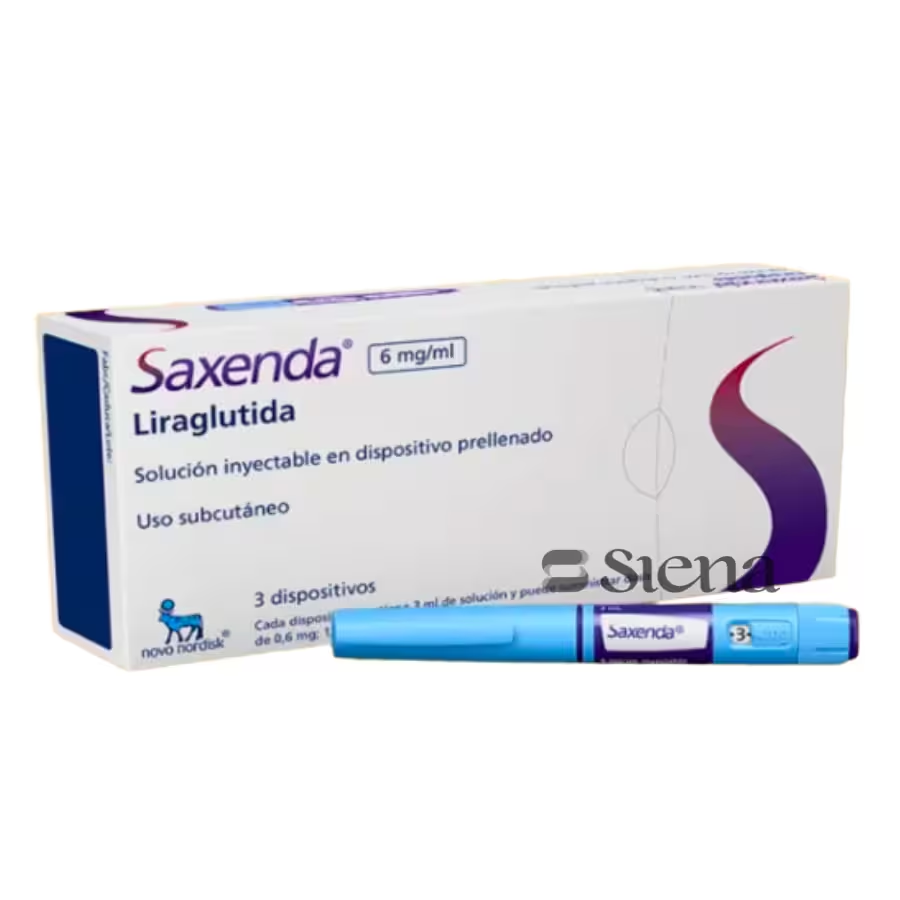
While older and requiring a daily injection, Saxenda still has a place in 2026 for specific patients.
Average Weight Loss: 8–10%.
Who should consider it: Patients who prefer a shorter-acting drug that leaves their system quickly if they experience side effects, or those whose insurance exclusively covers daily options.
🚀 Retatrutide (The “Triple Agonist” Future)
Currently in Phase 3 trials and nearing FDA submission in 2026, Retatrutide is the “Triple G” drug (GLP-1, GIP, and Glucagon). Early data from February 2026 suggests it may achieve weight loss nearing 30%, rivaling bariatric surgery results 1. It is not yet widely available but is the most anticipated drug of the year.
Which GLP-1 Is Best for Different Goals?
Best for Maximum Weight Loss: Tirzepatide (Zepbound). If your goal is to lose more than 20% of your body weight, the dual-agonist approach is statistically superior.
Best for Moderate Weight Loss: Semaglutide (Wegovy). Ideal for those looking to lose 10-15% with a well-established safety track record.
Best for Lower Cost Option: Compounded Semaglutide. In 2026, reputable telehealth programs like MEDVi offer compounded versions starting at $179–$299/month for those without insurance coverage 2.
Best for Non-Diabetics: Both Wegovy and Zepbound are specifically FDA-approved for obesity in non-diabetics.
GLP-1 Cost Comparison
The “out-of-pocket” cost is the biggest hurdle in 2026.
Brand Name (Cash): Expect to pay $500–$1,300 per month depending on manufacturer discounts.
Insurance: If covered, copays typically range from $25 to $100.
Compounded: Compounding pharmacies have filled the shortage gaps in 2026, offering monthly rates of $150–$400, though they lack the FDA “brand-name” safety review.
🔗 Full Price Guide: GLP-1 Weight Loss Cost
Side Effects and Safety Comparison
While effective, these drugs are not without trade-offs.
Gastrointestinal Effects: Nausea is the #1 complaint for Semaglutide, while Diarrhea is more common with Tirzepatide.
Lean Mass Loss: A major 2026 research focus is Sarcopenia (muscle loss). Because you lose weight so fast, up to 40% of that weight can be muscle if you don’t prioritize protein and resistance training 4.
Cardiometabolic Benefits: Beyond weight, these drugs are now being prescribed to reduce the risk of heart attack and stroke, particularly Wegovy.
Frequently Asked Questions
What is the strongest GLP-1 for weight loss?
Currently, Tirzepatide (Zepbound) is the strongest available. Retatrutide (upcoming) is expected to be even stronger.
Is tirzepatide better than semaglutide?
In head-to-head trials, Tirzepatide consistently results in higher weight loss (21% vs 15%) because it targets two receptors instead of one.
Which GLP-1 causes the least side effects?
This is patient-specific, but many report that the GIP component in Tirzepatide helps balance out the GI distress found in pure GLP-1s.
What happens after stopping?
Without a maintenance plan, most patients regain a significant portion of the weight. In 2026, “maintenance dosing” is the standard of care to prevent regain.
Final Verdict – Which GLP-1 Drugs Is Best in 2026?
Most Powerful: Tirzepatide (Zepbound)
Best Balanced Option: Semaglutide (Wegovy)
Budget-Conscious: Compounded Semaglutide or Liraglutide (Saxenda)
The Future Breakthrough: Retatrutide
Consult a board-certified obesity specialist before starting therapy. Every metabolism is unique, and a doctor can help you navigate your medical history (including risks like pancreatitis or thyroid history) to find your perfect match.

Reliable Health Insights, Expert Medical Guidance, Updates, Tools, and Valuable Resources.


Stay informed with valuable health and wellness tips delivered straight to your inbox.
Created with ©systeme.io