GLP-1 for Weight Loss: Drugs, Results, Cost & Safety (2026 Guide)
The landscape of metabolic health has been fundamentally reshaped in 2026. What began as a breakthrough in diabetes management has evolved into a global revolution in obesity treatment. Today, GLP-1 weight loss medications are no longer just “the skinny shot”—they are sophisticated metabolic tools that help millions manage chronic weight issues, reduce cardiovascular risk, and even address liver disease.
In this comprehensive guide, we explore the latest data from 2025 and 2026 to help you understand how these drugs work, what results to expect, and which option is right for your body.
What Is GLP-1 and How Does It Help With Weight Loss?
If you’ve struggled with traditional dieting, you know that “willpower” often fails because your body’s biology is working against you. GLP-1 medications change that biology.
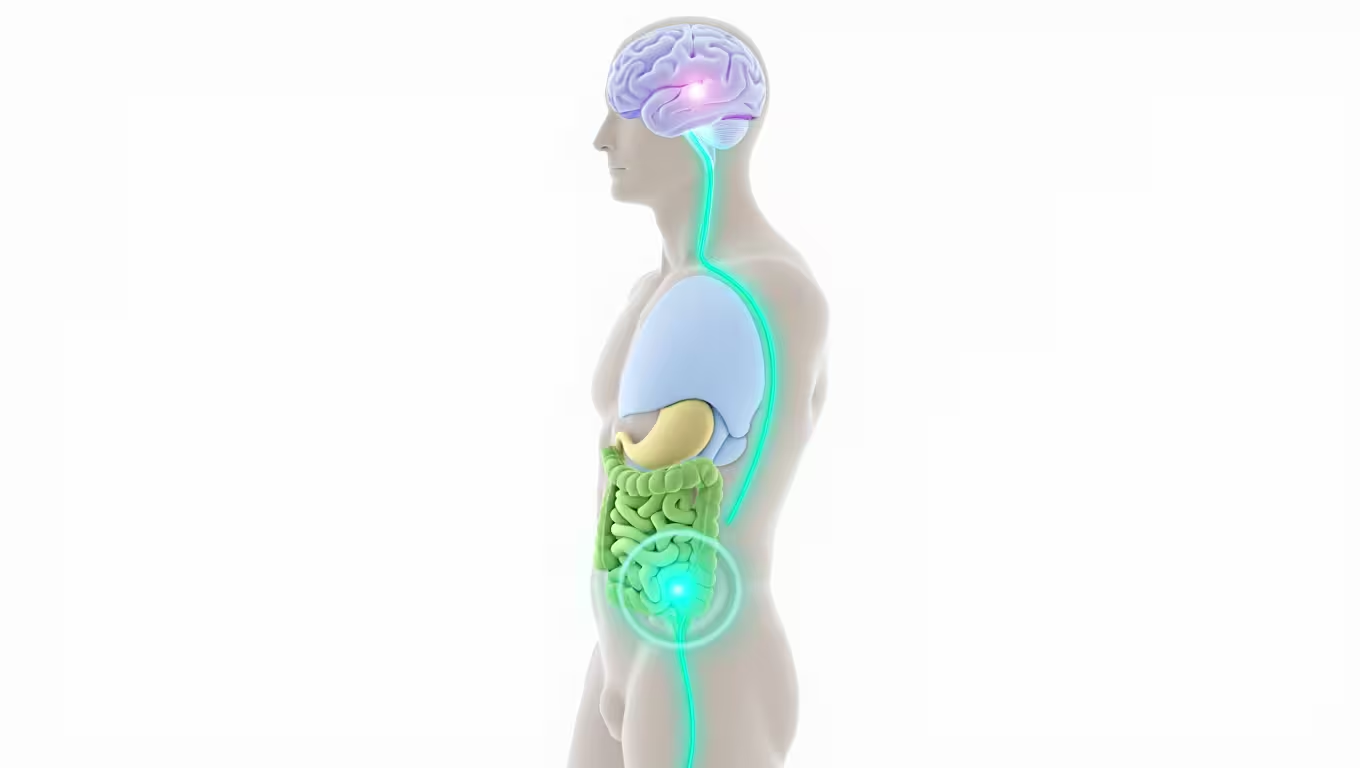
What Does GLP-1 Stand For?
GLP-1 stands for Glucagon-like peptide-1. This is a naturally occurring hormone produced in your small intestine. In its natural state, it lasts only a few minutes, but pharmaceutical versions—known as GLP-1 receptor agonists—are engineered to last much longer, staying in your system for a week or more.
Its primary role is blood sugar regulation. When you eat, GLP-1 signals your pancreas to release insulin, which lowers blood sugar, and prevents your liver from making too much sugar.
How GLP-1 Reduces Appetite
Beyond insulin, GLP-1 is a powerful messenger to the brain and stomach:
Slows Gastric Emptying: It keeps food in your stomach longer, making you feel physically “stuffed” on smaller portions.
Reduces Hunger Hormones: It crosses the blood-brain barrier to target the hypothalamus, effectively “turning off” the constant noise of food cravings (often called “food noise”).
Increases Satiety: It enhances the feeling of satisfaction after a meal.
Why GLP-1 Is Used for Obesity (Not Just Diabetes)
While originally intended for Type 2 Diabetes, researchers noticed that patients consistently lost significant weight. This led to the development of higher-dose versions specifically approved for chronic weight management.
Learn more: GLP-1 Receptor Agonist for Weight Loss
Types of GLP-1 Medications for Weight Loss

The year 2026 has seen a shift from single-hormone drugs to “multi-agonists” that target several metabolic pathways at once.
GLP-1 Receptor Agonists
These are the “original” generation of drugs that mimic only the GLP-1 hormone.
Examples: Semaglutide (Wegovy), Liraglutide (Saxenda), and older options like Adlyxin or Tanzeum.
🔗 Compare the options: Best GLP-1 Drugs for Weight Loss
GLP-1/GIP Dual Agonists (New Generation)
The “dual agonist” approach is currently the gold standard in 2026. By combining GLP-1 with GIP (Glucose-dependent Insulinotropic Polypeptide), drugs like Tirzepatide achieve superior weight loss with potentially fewer side effects.
Tirzepatide (Zepbound): Clinical trials in 2025-2026 (like SURMOUNT-1) showed up to 21-22% weight loss over 72 weeks.
🔗 Deep Dive: GLP-1 vs GIP Weight Loss
Oral vs Injectable GLP-1
Weekly Injections: The most common form (Wegovy, Zepbound). It involves a tiny needle into the abdomen or thigh.
Daily Oral Tablets: Emerging in 2026, Orforglipron is a non-peptide oral GLP-1 that offers an alternative for those with needle phobia, though it requires strict fasting protocols.
Best GLP-1 for Weight Loss (Compared)
| Medication | Mechanism | Frequency | Avg. Weight Loss (1 Year) | Common Side Effects |
|---|---|---|---|---|
| Semaglutide (Wegovy) | GLP-1 Only | Weekly | 15% – 17.4% | Nausea, Vomiting |
| Tirzepatide (Zepbound) | GLP-1 + GIP | Weekly | 21% – 22.5% | Diarrhea, Dyspepsia |
| Retatrutide* (Upcoming) | GLP-1 + GIP + Glucagon | Weekly | ~24% – 30% | Nausea, Increased Heart Rate |
| Liraglutide (Saxenda) | GLP-1 Only | Daily | 8% – 10% | Injection Site Reaction |
*Retatrutide is currently in late-stage clinical trials and not yet fully approved as of 2026.
Prescription Savings & Discount Options
Cost is often one of the biggest deciding factors when choosing a GLP-1 medication. Brand-name treatments like Tirzepatide (Zepbound) and Semaglutide (Wegovy) can range from $900 to $1,300 per month without insurance coverage.
Because of this, many patients explore manufacturer savings programs or verified prescription discount platforms to reduce out-of-pocket costs.
If you're considering either medication, you can review current savings information below:
⚠️ Important Note
Savings eligibility varies depending on insurance coverage, prescription requirements, and geographic location. Always consult a licensed healthcare provider before starting or changing any GLP-1 medication. This content is for informational purposes only and does not constitute medical advice.
This services not available in Mississippi (US)
GLP-1 Weight Loss Results (What to Expect)
Weight loss on these medications is typically a marathon, not a sprint.

Average Weight Loss in 3, 6 & 12 Months
According to 2026 real-world data, the trajectory for a high-dose GLP-1 user is:
3 Months: 5% to 8% of body weight loss. This is the “adaptation phase.”
6 Months: 10% to 15%. Most patients see a significant change in clothing size here.
12 Months: 15% to 22%+. This is where the “plateau” usually begins as the body reaches a new set point 7.
🔗 See the transformations: GLP-1 Weight Loss Results
How Fast Does GLP-1 Start Working?
Most patients feel the “appetite suppression” within 24 to 48 hours of their first dose. However, significant metabolic changes and visible weight loss typically become apparent between weeks 4 and 12 once the dose has been titrated up.
Who Can Use GLP-1 for Weight Loss?
BMI Requirements
FDA and international guidelines generally require:
A BMI of 30 or higher (Obesity).
A BMI of 27 or higher (Overweight) along with at least one weight-related condition such as high blood pressure, Type 2 diabetes, or high cholesterol.
GLP-1 for Non-Diabetics
In 2026, it is widely accepted that GLP-1s are highly effective for non-diabetics. In fact, research suggests non-diabetics may lose weight more rapidly (15-25% avg) than those with Type 2 diabetes, whose metabolic resistance can slow the process.
GLP-1 Dosage for Weight Loss
Starting Dose
To minimize side effects like nausea, doctors use a “Slow-Start” method. You typically begin at a very low dose (e.g., 0.25mg for Semaglutide) for the first four weeks.
Dose Escalation Schedule
Doses are increased every four weeks until reaching the “maintenance dose.”
Month 1: 0.25mg
Month 2: 0.5mg
Month 3: 1.0mg
Month 4: 1.7mg
Month 5+: 2.4mg (Full dose)
GLP-1 Weight Loss Cost in 2026
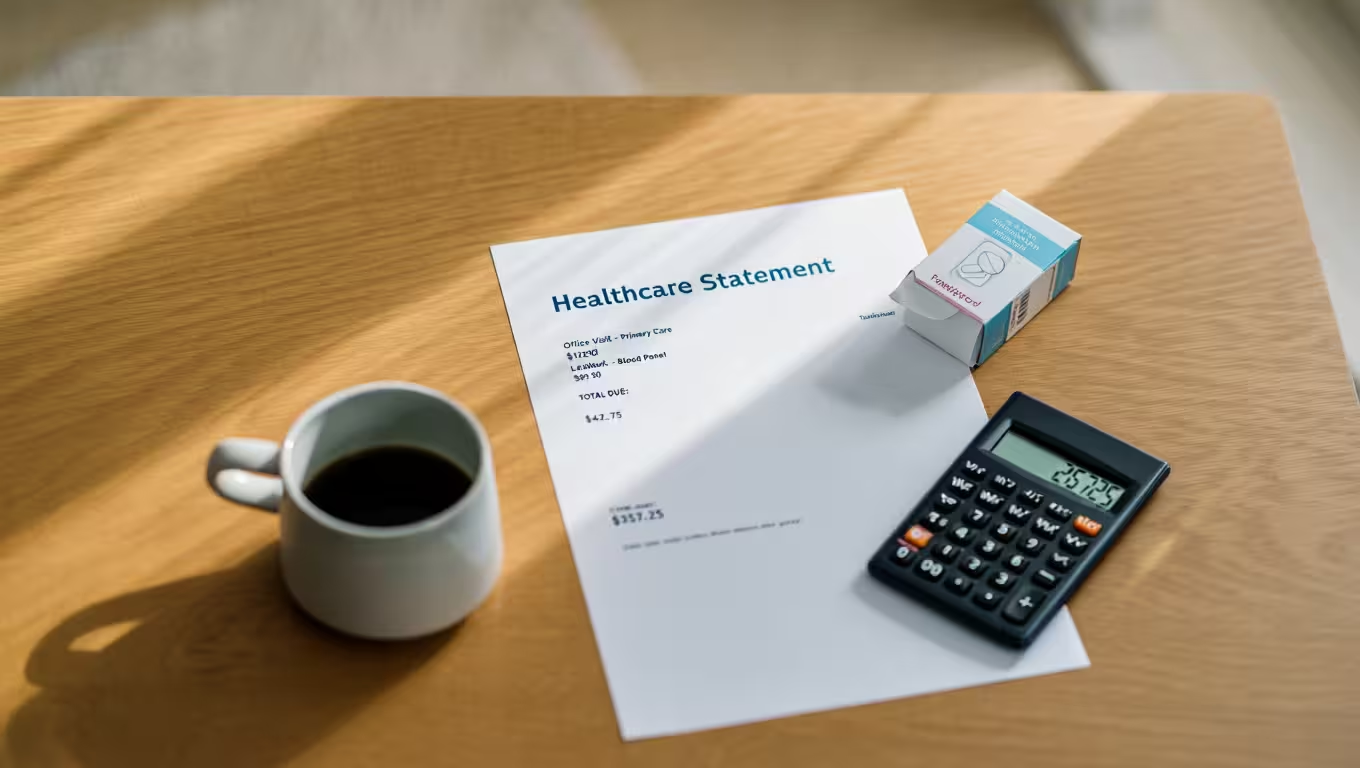
The cost remains a significant barrier for many.
Monthly Cost Without Insurance: Ranges from $900 to $1,300.
Insurance Coverage: In 2026, more employers have added weight management to their plans, but coverage still varies wildly.
Compounding & DTC: Many patients are turning to direct-to-consumer clinics which offer compounded versions for $250 to $500 per month, though safety oversight is a 2026 regulatory focus.
🔗 Pricing breakdown: GLP-1 Weight Loss Cost
Side Effects and Safety

Common Side Effects
Most side effects are gastrointestinal and occur during the dose-escalation phase:
Nausea (most common)
Vomiting or Diarrhea
Constipation (often requiring fiber supplementation)
Serious Risks (Rare)
Pancreatitis: A safety alert in January 2026 highlighted the need for monitoring.
Muscle Loss: Rapid weight loss can lead to sarcopenia (muscle wasting). 2026 health trends emphasize protein-rich diets and resistance training while on GLP-1s.
GLP-1 Agonist vs GLP-1 Inhibitor (Important Difference)
Common Side Effects
There is often confusion between these two terms:
GLP-1 Agonist: Mimics the hormone to increase its activity. This causes weight loss.
DPP-4 Inhibitor (GLP-1 Inhibitor): Prevents the breakdown of your natural GLP-1. These are used for diabetes (like Januvia) but are generally weight-neutral and do not cause significant weight loss.
🔗 Clarify the science: GLP-1 Agonist vs Inhibitor
Frequently Asked Questions
Is GLP-1 safe for long-term use?
Studies through 2026 suggest they are safe for long-term use, though many doctors now view obesity as a chronic condition requiring “maintenance doses” to prevent weight regain.
How much weight can I lose on GLP-1?
On average, between 15% and 22% of your starting body weight with the newest dual agonists.
What happens if you stop GLP-1?
Recent 2026 data shows that weight regain is common. Patients lost an average of 8.3kg to 14.7kg during treatment but began regaining roughly 0.4kg per month after cessation without lifestyle intervention.
Final Verdict – Is GLP-1 Worth It for Weight Loss?
GLP-1 medications are a revolutionary tool, but they are not a “magic pill.” They work best for individuals who have struggled with metabolic resistance, PCOS, or obesity that hasn’t responded to diet and exercise alone.
Who benefits most: Those with a BMI over 30 who are committed to high-protein nutrition and muscle preservation. When it may not be ideal: If you have a history of medullary thyroid carcinoma or are looking for a “quick fix” for 5-10 pounds of vanity weight.
Medical consultation is mandatory. Always speak with an endocrinologist or obesity specialist to navigate the dosage and potential risks.

Reliable Health Insights, Expert Medical Guidance, Updates, Tools, and Valuable Resources.


Stay informed with valuable health and wellness tips delivered straight to your inbox.
Created with ©systeme.io